
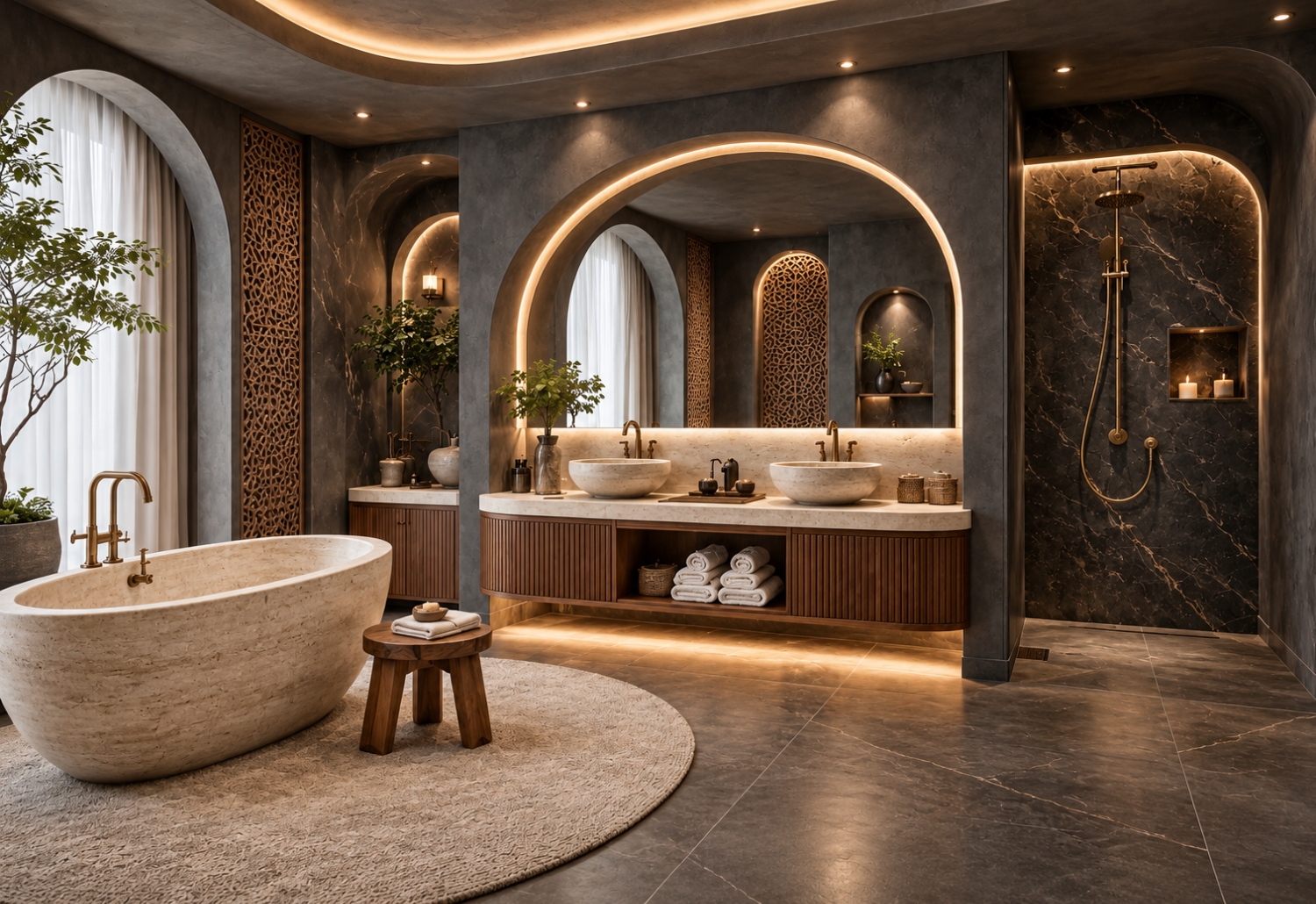
Spa bathroom upgrades
A well-designed bathroom should feel calm before it feels luxurious. That is where spa bathroom upgrades make the most significant difference. You do not need an oversized soaking tub or a full renovation to create a more peaceful space. Often, the strongest changes come from layout, lighting, material choices, storage, and visual consistency.
The idea is simple. A bathroom that looks cluttered, feels cold, or uses harsh lighting will never fully deliver that spa-like atmosphere. A bathroom with softer textures, warmer finishes, and cleaner visual lines feels entirely different, even if the footprint stays exactly the same.
Why Spa Bathroom Upgrades Work in Interior Design
Good bathroom interiors are built around sensory balance. The eye needs less clutter. The room needs softer light. Hard surfaces benefit from warm contrast. Towels, wood, glass, stone, and muted colors help break up the clinical feeling that bathrooms often have.
That is why spa bathroom upgrades should begin with the room itself rather than decorative accessories. The most successful spa-inspired bathrooms feel edited, not overdesigned. They use fewer materials but use them well.
Start With a Softer Material Palette
Bathrooms naturally contain a lot of hard finishes: ceramic tile, glass, metal, mirrors, stone, and sanitary fittings.
If every surface feels cold and reflective, the room can look sharp but not relaxing. Introduce warmer materials to balance that effect. Natural or wood-look finishes work particularly well. Teak stools, oak-toned cabinetry, woven baskets, stone trays, and textured bath mats instantly soften the visual temperature.
For luxury bathroom ideas, contrast matters more than simply using expensive materials. Pair smooth stone with natural wood. Combine glass with textured towels. Use brushed metal instead of overly reflective chrome if you want a calmer finish.
Lighting Changes the Entire Mood
Lighting is one of the most important spa bathroom upgrades, yet it is often ignored. A single bright ceiling light makes the room practical but rarely relaxing. Layered lighting works far better.
Use warm overhead lighting for general visibility, then add softer light around the mirror, vanity, or bathtub zone. Wall sconces, backlit mirrors, concealed LED strips, and dimmable fittings can transform the room after sunset. Avoid overly cool white lighting if the goal is a home spa atmosphere. Warm light makes stone, wood, and skin tones look softer. It also helps the bathroom feel less clinical.
Simplify the Vanity Area
Visual clutter creates stress. That is why one of the easiest at-home spa bathroom design ideas is simply reducing what stays visible. Keep only a few everyday items on the vanity. Store backup toiletries, grooming products, and cleaning supplies inside drawers or cabinets.
Use matching trays or containers to group smaller objects.
This makes the surface feel intentional rather than crowded. High-end bathroom decor often looks expensive because everything has a designated place. The effect comes from restraint, not quantity.
Use One Consistent Color Story
A spa-inspired bathroom benefits from a narrow color palette. Warm whites, sand, taupe, soft grey, muted green, clay, and natural wood tones work especially well. They create visual continuity without becoming flat.
Pick two main colors and one accent.
For example, warm white walls, oak cabinetry, and black hardware can feel modern. Stone beige, brushed brass, and muted green feel softer and more organic. The goal is not to make the bathroom boring. It is to avoid visual competition.
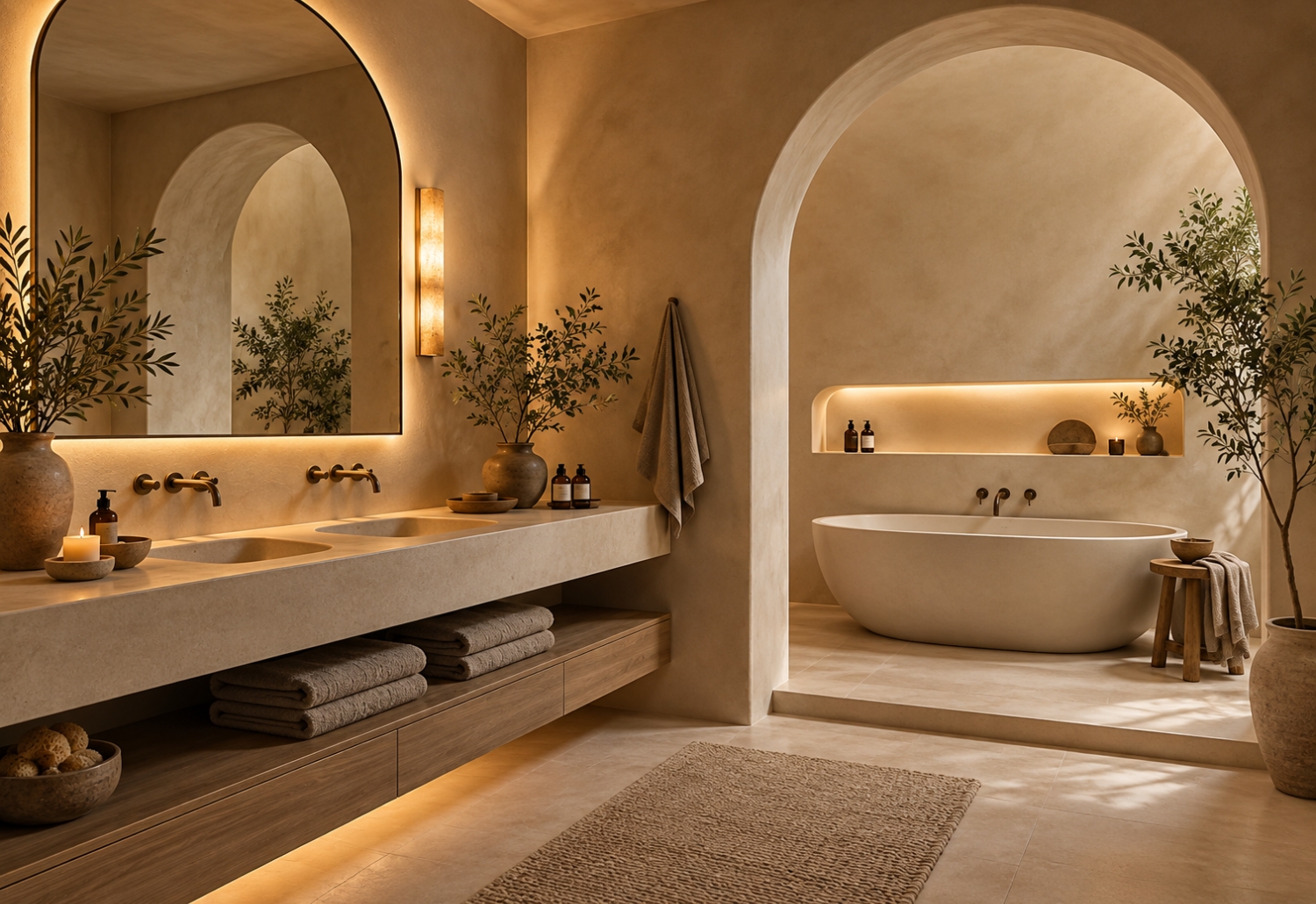
At home spa experience
Bring Nature Into the Room
Natural elements are central to successful bathroom relaxation upgrades.
Plants help soften tile-heavy spaces and bring movement into the room. Choose moisture-tolerant options such as pothos, peace lilies, ferns, or snake plants if the light conditions work.
If real plants are impractical, use natural textures instead. A teak bench, woven basket, linen-look shower curtain, or stone accessory can create the same visual warmth. Even one organic material can stop the room from feeling sterile.
Spa Bathroom Upgrades for Small Bathrooms
Small bathrooms can actually work beautifully with a spa-inspired approach because the design relies on simplicity.
Keep the floor as visually open as possible. Wall-mounted vanities help. Floating shelves work better than bulky storage towers. Clear shower glass keeps sightlines open. Large-format tiles reduce grout lines and make the room appear cleaner.
Use mirrors strategically too. A large mirror reflects light and creates more depth, while recessed niches reduce bottle clutter inside the shower. For professional spa upgrades for small bathrooms, every visible element should earn its place.
Quick Interior Styling Tips
A few changes can bring the full look together:
- Use large-format tiles to reduce visual breaks.
- Choose one metal finish across taps, handles, and accessories.
- Keep towels in one coordinated color family.
- Add a wooden stool or bath tray for natural warmth.
- Use concealed storage wherever possible.
- Swap harsh lighting for warmer layered illumination.
- Keep decorative objects minimal.
- Add one plant or natural-texture element.
- Use a large mirror to reflect light.
- Keep counters almost empty.
These choices create a stronger effect than adding more decoration.
Create a Stronger Shower Zone
The shower should feel like part of the room, not a separate utility area. Use the same or complementary tiles across the floor and walls for a more seamless appearance. A frameless glass partition helps the room feel open. Built-in niches are another good upgrade.
They keep bottles off the floor and remove the need for bulky shower caddies. This is one of the most practical spa bathroom upgrades because it improves both function and appearance. If possible, add a bench or ledge in the shower zone. It introduces a more considered, architectural feel.
Texture Matters More Than Decoration
Texture creates warmth without making the bathroom busy. Use thick towels, soft bath mats, matte ceramics, brushed metals, wood grain, linen textures, and stone finishes.
These details make the room feel layered. Avoid filling every surface with candles, trays, jars, and decor pieces. A spa atmosphere comes from calm visual rhythm, not a collection of “spa-themed” objects. Less works better.
Conclusion
The best spa bathroom upgrades are really interior design decisions that make the space feel quieter, warmer, and more intentional. Soft materials, layered lighting, natural textures, hidden storage, a controlled color palette, and cleaner shower zones can completely change the mood without altering the footprint. The key is to remove visual noise and build comfort into the room itself. When every material, light source, and storage choice feels considered, the bathroom stops looking like a purely functional space and starts feeling like a private retreat.